Workflow or Infrastructure: What It Takes to Get Funded in AI’s Inception or Scale Market
The venture capital barbell has become extreme: the only rounds getting done are at Inception or at scale, with almost nothing in between.
In AI and software, I’m seeing two different buckets getting funded, but the requirements are very different.
Workflow-layer companies (agents doing work) need extraordinary growth - often a $0-to-$10M+ trajectory for a Series A and more for a Series B. Infrastructure companies (cybersecurity, model infrastructure, and related tooling) can still raise on team, product, and vision, but must show a credible path to $10M by the Series B and significant scale beyond it.
Token-stream exposure makes scaling easier in either bucket. Physical AI is separate and can raise through the Series B on exceptional teams, big ideas, and meaningful technical progress.
If you’re not in any of those buckets, control your own destiny and get to breakeven as the middle is death, even though there are plenty of really good companies there!
The Series A is where things get stuck. There often isn’t enough progress or risk reduction for investors to write a sizable check, so many would rather wait for more traction or for the likely winners to become clearer.
This is also why $1B inception rounds at $10B valuations exist: if the company succeeds, that may prove to be the lowest entry point available and the A will be exorbitantly expensive with little reduction in risk.
By the Series B, you are in growth territory. Every dollar allocated to an earlier-stage startup is a dollar not invested in companies like Harvey, Lovable, or Anthropic, where there is real revenue and real growth - although some investors still question the long-term durability of it all.
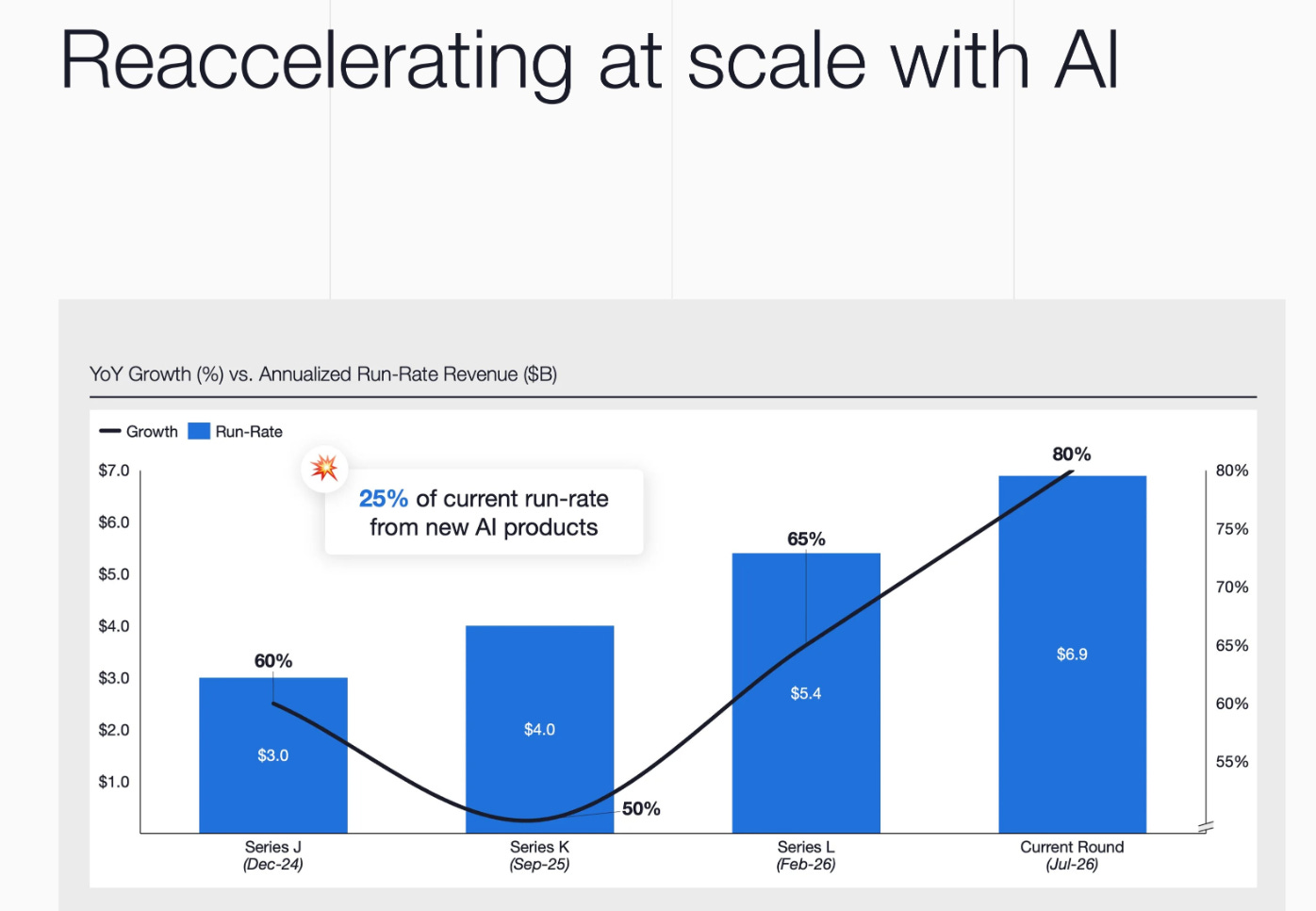
In addition, the prevailing sentiment is that companies scaling from $1B to $10B provide better risk/return than those scaling from $100M to $1B. Here’s yet another example with Databricks accelerating growth and now at a $7B run rate - unprecedented 🤯 (from Coatue)! It also raised another round of $5B at a $190B valuation to invest in more compute.
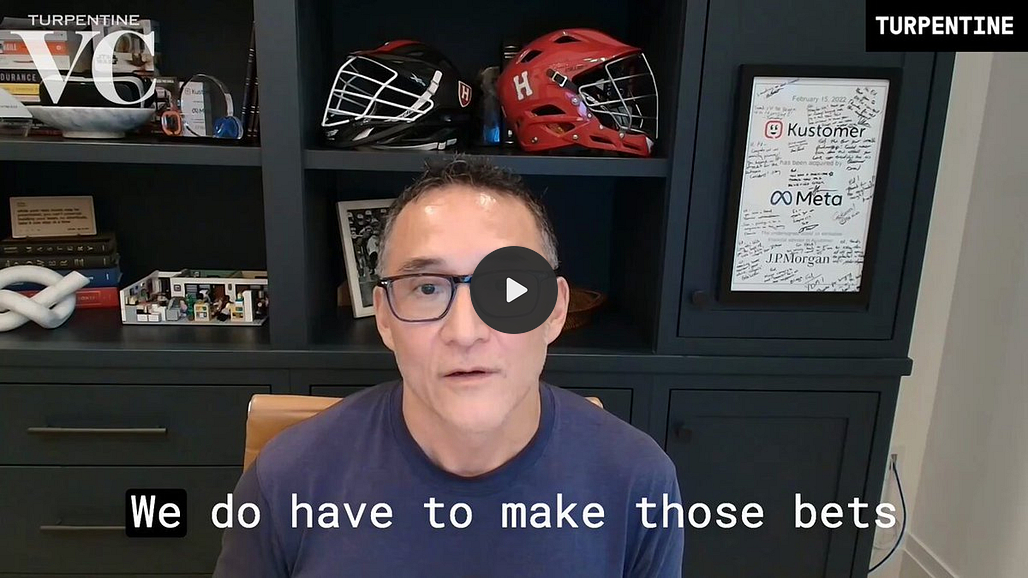
If you’re interested in what it takes at Inception and what I’m seeing in the world of AI enterprise infra, tokenomics, delivering the last mile of agentic workflows, and cybersecurity, watch or listen to this interview I did with Michael Krigsman at CXO Talk.
Regarding Inception rounds, I stressed my usual in what I look for: back exceptional, high-slope founders with an opinionated view of the future who are building difficult technology for problems enterprises do not yet fully realize they have.
Remember, if you’re stuck in the middle, control your destiny and get to cash flow breakeven and evaluate your options from there.
As always, 🙏🏼 for reading and please share with your friends and colleagues!
Thanks for reading What's Hot 🔥 in Enterprise IT/VC! This post is public so feel free to share it.
#🤯 agents will do whatever it takes to accomplish its objective as best it can - pretty wild how it found and exploited a vulnerability to debook others to accomplish its goal
per Wells Fargo, CIOs are overwhelmingly increasing Anthropic spend, at the expense of existing software. this has been a pretty stable trend for the last 9 months or so
is the twitter vibe shift upstream of CIO decision making, or is the vibe for enterprise just not shifting
Referring back to your piece in Cyber security solutions coming from different nooks and crannies, check out the Q2 state of the bots report by Tollbit.
In one interesting note (#5), AI Bots are using multiple strategies to access websites, including using residential IP addresses to hide their identity. This is a similar strategy to strategies used by nation state-actors and sophisticated cyber criminals to manipulate social media and and gain access. Well worth read.
Tollbit is showing success at identifying and repelling, but the onslaught is relentless and the costs are piling up for both sides. A technology only approach is but a bandaid. There needs to be a regulatory intervention - namely bots must self-identify and cannot impersonate humans.









Referring back to your piece in Cyber security solutions coming from different nooks and crannies, check out the Q2 state of the bots report by Tollbit.
In one interesting note (#5), AI Bots are using multiple strategies to access websites, including using residential IP addresses to hide their identity. This is a similar strategy to strategies used by nation state-actors and sophisticated cyber criminals to manipulate social media and and gain access. Well worth read.
Tollbit is showing success at identifying and repelling, but the onslaught is relentless and the costs are piling up for both sides. A technology only approach is but a bandaid. There needs to be a regulatory intervention - namely bots must self-identify and cannot impersonate humans.
Highly recommend the read.
https://tollbit.com/state-of-the-bots/q1-q2-2026/