As you know, I’m obsessed with agents for personal productivity, for work and beyond. Until the past couple of weeks there hasn’t been a leading consumer version that just works and is just easy to use and feels magical. Until Muse.
Muse, Meta AI’s consumer agent, is a simply fantastic out-of-the-box experience. It solves a burning problem: users want their own personal agents without the complications. They just want an easy button.
So easy that, well, you give it everything despite knowing there are some security issues 🤣. As of now, Muse is the it-product for consumers as it hit 2.8M downloads in its first 12 days, outpacing ChatGPT on its early mobile launch.
Wall Street is throwing around some interesting projections already with one bank citing $28B of AI agent revenue by 2027 driven by 115M paying users at the same conversion rate as ChatGPT 🤯.
and then Meta Connect this week made it official: Muse is the centerpiece of everything Meta does. It’s free, Meta takes a small cut of every transaction, and Reality Labs is pivoting from the metaverse to glasses built around Muse 🤯. There’s also a new Muse device or companion that reminds me of the old Tamagotchi - you need to see them. Zuck is firing on all cylinders!
So why is the Muse launch such a big deal? I believe a couple of things:
User experience over best model. Us techies on X have no idea what the everyday user wants, it’s all about user experience and ease of use - who cares about the underlying model - frontier Opus or Astra or Fable - if you can just make it work, you’ll get insane demand. Consumers don’t give a crap about benchmarks, they just want the easy button. Muse won’t be the only one, and I’m excited to see more agents that truly do work for us!
As an aside, even Microsoft sees it - Deirdre Bosa calls the new Copilot Autopilot “Muse for Business,” a bet that the race is moving from models to products. Welcome to the new era of user experience!
The more users, the more data, the better the model! While I said consumers don’t really care about the model, the one other huge aspect is that Meta is building a massive data set of real world agent interactions, commerce purchases, and other data sets that don’t exist - this will only make its next Spark model that much better!
Who owns the customer and shopping experience? Muse is the first product that will unlock agentic commerce in a massive way, especially with partnerships with Shopify, Expedia, Instacart and more to come. And when agents can price search 24/7 for hours, days and weeks, individuals will start buying from the lowest price trusted merchant. Price discovery becomes instantaneous. This is a massive battle that will play out before our very eyes.
This is why Amazon is blocking Muse. If you think the enterprise data access battle is going to be insane where systems of record don’t want to be relegated as a database, wait till the consumer battle escalates - first shot fired from Amazon.
Once again, will we see a world where every vendor has its own agents like the enterprise or do you have one to just get work done? I hope the latter, but will be interesting to see who embraces agent APIs for all to use and who closes down their systems!
With compute, you can just do anything and free wins. There are very few companies besides Meta that can subsidize a free Muse VM with 2 vCPUs, 8GB RAM, and 100GB of persistent disk for each muse agent - you need to already have the compute which Meta has, and a way to subsidize it which Google can also do. The cost to compete in consumer is off the charts 🤯.
This is going to drive insane needs for security! And if you want the why, Alex Wang, who built Muse, just laid it out: a second mind that “sends the email, makes the phone call, finds the funding.” Read that list again. Every item is an agent acting as you, with your identity and your money.
As agents start shopping for us and people go YOLO mode with their data, security goes from nice-to-have to table stakes. And it’s not theoretical - a researcher already dropped a zero-day that lets local malware on your Mac hijack Muse and get into your mail, messages and calendar.
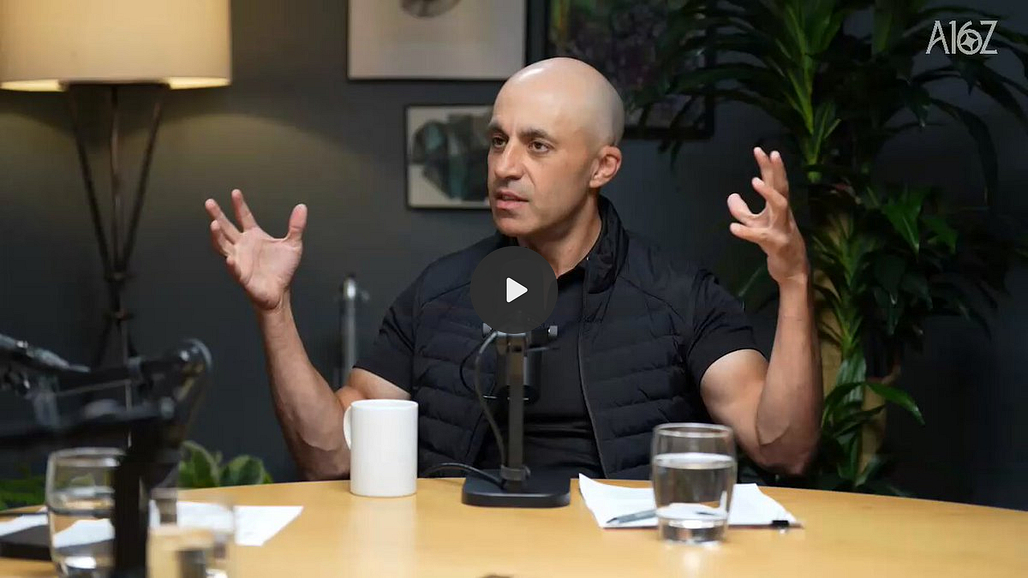
When an agent can spend your money, the question isn’t how smart it is, it’s who it is and what it’s allowed to do, right now, for this one task. That’s identity and permissions at runtime, and it’s exactly what Ian and team at Keycard (a boldstart portfolio co) are building - watch the clip:
The world is not ready for millions of agents bombarding their systems 24/7! What kind of infra will have to be built, API call blockers and throttling, how does customer support keep up? There were already examples I highlighted last week where bots like Instinct were pinging Resy servers every second and which resulted in a user losing his account. The strain on the infrastructure is going to be insane with these unleashed en masse - imagine Muse calling a call center every minute until it gets an answer.
Muse proved consumers will hand an agent the keys if it’s easy enough. Consumers just want the easy button. There’s a whole lot of infrastructure still to be built to make that button work. This is why I’m so excited about what comes next 🔥.
As always, 🙏🏼 for reading and please share with your friends and colleagues!
Thanks for reading What's Hot 🔥 in AI/Infra/VC! This post is public so feel free to share it.
#super important read from Venky at Menlo - when price is the determinant of success and other thoughts on the state of venture capital and startups
Here is how reflexivity is playing out in AI. Full disclosure: Menlo is an investor in Anthropic, so read the following with that in mind. People watched a frontier lab go from a $4 billion valuation to $18 billion, then $60 billion, then $180 billion, then $380 billion, and now something close to a trillion. They drew the obvious conclusion: that is what a neo lab looks like. So the next neo lab gets priced off that path, not off anything it has built. Then it gets marked up in a subsequent round, and the markup itself becomes the proof. Look at Thinking Machines. Look at Reflection. At that point valuation has stopped being an output of the metrics and has become the metric. Nobody is discounting cash flows. They are discounting the last round.
#blazing inference 🔥 - Systalyze (a boldstart port co) is now #1 on Artificial Analysis in every model config it entered. Gemma 461 tok/s vs 109 for #2, DeepSeek V4 Pro 274 vs 191. inference as a full-stack systems problem
#revenue per employee is the new growth metric - Deel added >$140M ARR in 90 days with zero new headcount. 8k+ internal agents doing the work of ~600 people, rev/employee went $130K → $215K... then they productized it as Akai 🤯
EXCITED TO LAUNCH: Akai (akai.run)
Deel added >$140M ARR in 90 days without increasing headcount by automating~600 Full Time Employees' equivalent in work with Akai.
Akai was an internal tool to automate our painfully repetitive operations in Finance, HR, …
8:08 PM · Sep 21, 2026 · 1.99M Views
302 Replies · 275 Reposts · 2.26K Likes
#nothing new here, if you are at user workflow layer you better be training your own models! It’s a matter of survival!
Muse and the bombardment you speak of that is already happening and coming is the opportunity for Tollbit and Cloudflare. Agentic CDN and security is how gate access to websites so they don't get overwhelmed and get fed information tailored to their needs. Plus ensure that Muse and other agents pay some kind of micro transactions to replace the ads that may get lost. A whole new economy is going get built here.


 Deirdre Bosa@dee_bosaThe new Copilot is Microsoft’s bet that the AI race is moving from models to products. It doesn’t need to own the best model if Copilot can choose among them and keep the customer inside Microsoft. The potential secret weapon is Autopilot (what I’ve been calling Muse for …
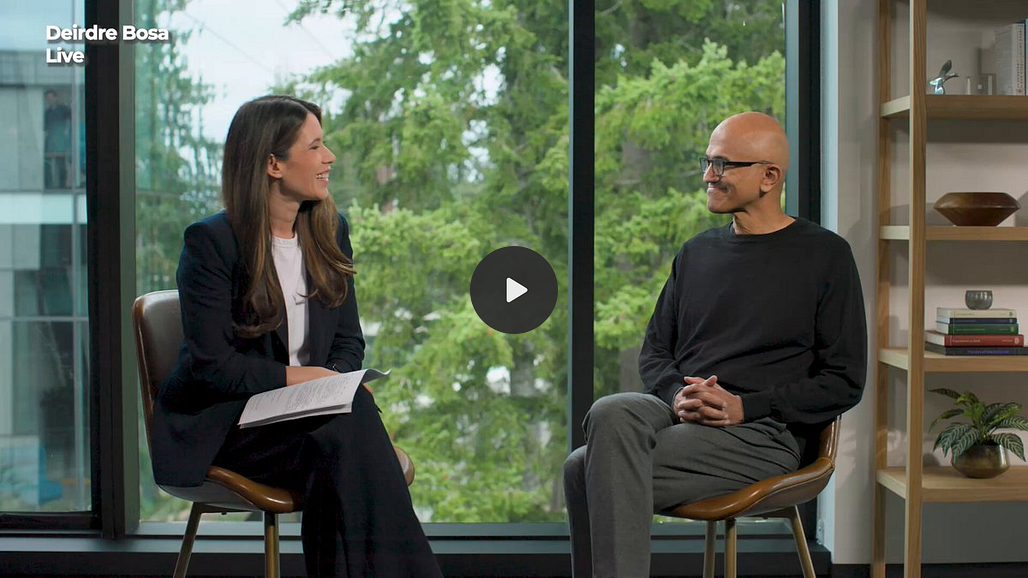 12:00 PM · Sep 25, 2026 · 127K Views67 Replies · 115 Reposts · 830 Likes
 Muse@Musecharmed to meet you!
 1:35 AM · Sep 24, 2026 · 2.83M Views547 Replies · 486 Reposts · 8.46K Likes
 BuccoCapital Bloke@buccocapitalAmazon cuts off Muse. While I am bullish Meta and Muse, I think many people are overlooking the digital knife fight that’s about to occur Nobody wants to get commoditized or layered here. Let the games begin
 12:29 PM · Sep 21, 2026 · 3.55M Views459 Replies · 386 Reposts · 5.82K Likes
 Alexandr Wang@alexandr_wangHere’s to the wanting. Here’s to the dreaming. Here’s to everyone. https://t.co/FHcmqU3fYf6:26 PM · Sep 25, 2026 · 1.43K Views7 Replies · 2 Reposts · 17 Likes



















Muse and the bombardment you speak of that is already happening and coming is the opportunity for Tollbit and Cloudflare. Agentic CDN and security is how gate access to websites so they don't get overwhelmed and get fed information tailored to their needs. Plus ensure that Muse and other agents pay some kind of micro transactions to replace the ads that may get lost. A whole new economy is going get built here.