Factories for Developers. Then Every Worker. Now Atoms?
I've been obsessed lately with what it might be like to live in a world of abundance, where the cost of creating almost anything approaches zero. I've written before about Iain M. Banks' Culture series, which I highly recommend, and last month I read Singularity Sky, a science fiction novel written by Charles Stross in 2003. One of the concepts that really stuck with me was the idea of "cornucopia machines," advanced technology capable of manufacturing virtually anything from information. Imagine a world where you could simply describe what you wanted and a machine could make it for you. What happens to scarcity and who gets to build the companies in that world?
In the book, a mysterious civilization called the Festival arrives on a planet and offers its inhabitants an extraordinary proposition: “Entertain us and we will give you anything you want.” The idea that you could essentially describe what you wanted and have a machine produce it was fascinating, particularly when you start thinking about what that would mean for manufacturing, scarcity, and the economics of creating physical goods.Then this week, two announcements this week reminded me that maybe this sci-fi isn’t so far off after all?
First was Satya Nadella’s discussion of the Infinite SaaS Factory, where he describes a future in which software is dynamically generated around the needs of individual workers and businesses.
The concept of software factories is certainly not new, and we’ve been watching this develop for quite some time with the rapid advances in coding agents from Anthropic, OpenAI, Google, and the other major AI labs. Our own portfolio company Tessl is helping developers build their own software factories, enabling agents to create, maintain, and evolve software with much greater autonomy.
What’s different with Satya’s statement is that he wants to democratize the creation of software factories and loops for everyone in the enterprise. We’ve spent decades building software that employees have to learn how to use, with predefined interfaces, workflows, and processes. Now imagine a world where every salesperson, marketer, finance professional, or operations employee can simply describe what they need and have the software created for them, connected to their company’s underlying data and systems. Anthropic is already doing some of this as well…
This could fundamentally change how enterprises consume software, what happens to traditional SaaS applications, and where value ultimately accrues in the software stack. We’ve already seen what happens when developers get their own software factories, and extending that capability to hundreds of millions of knowledge workers is an enormous opportunity. Then came Atomic Machines. From software factories to making actual physical things. 👀
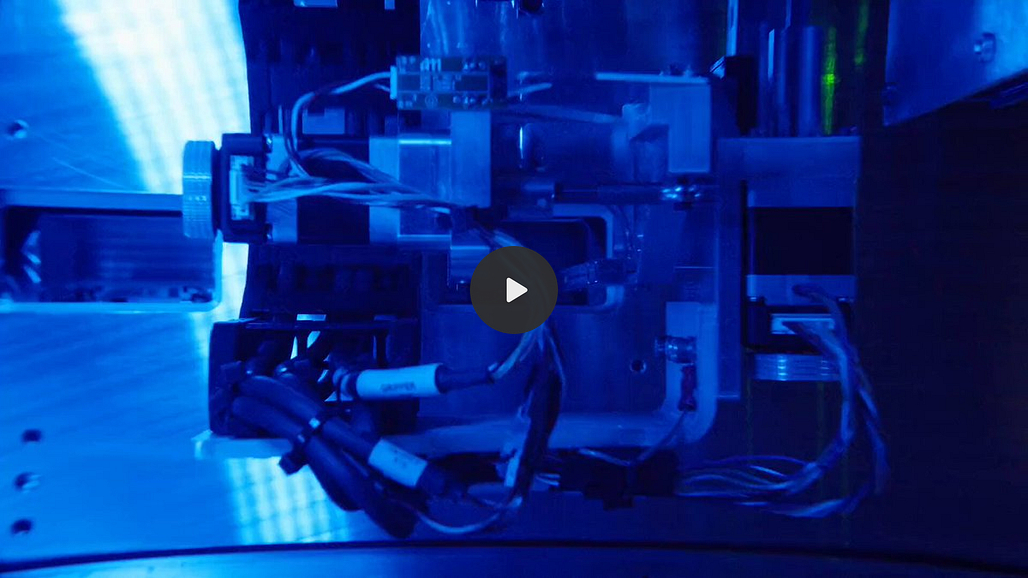
Jeff Holden, creator of Amazon Prime, unveiled Atomic Machines, a company that has spent the last six years in stealth developing what it calls the Matter Compiler, a programmable manufacturing system designed to translate digital instructions into working physical micromachines.
The ambition is to dramatically reduce the need for custom tooling and manufacturing processes every time someone wants to create something new. Instead of building an entirely new manufacturing process around each product, the manufacturing system itself becomes programmable.
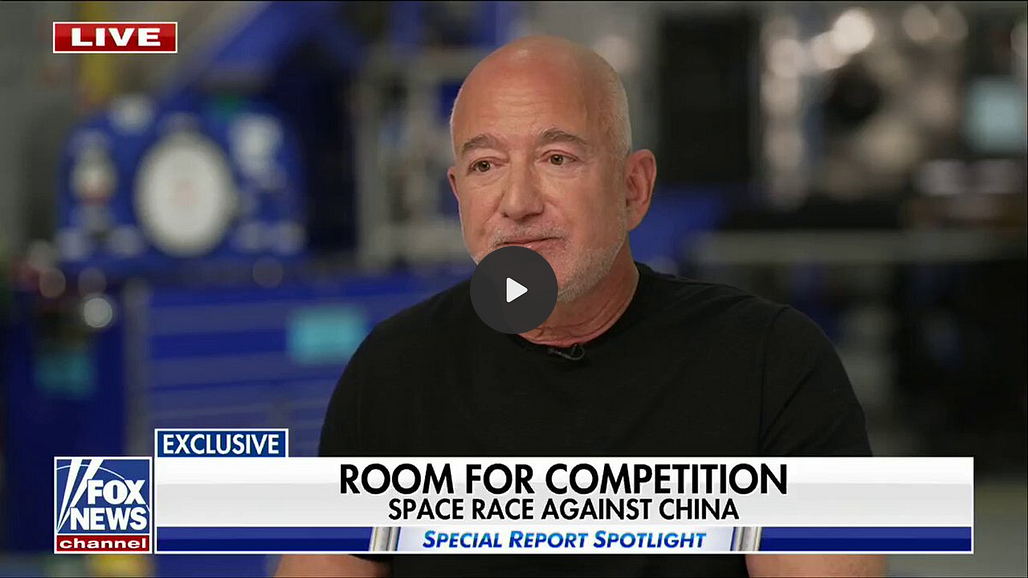
Also fascinating to see two Amazonians going all in on Physical AI. Alongside Jeff Holden at Atomic Machines, Jeff Bezos is co-founder and CEO of Project Prometheus, which he describes as “AI for atoms.”
His ambition is to build an artificial engineer that helps people design and manufacture physical things, accelerating invention and making engineering tools easier for anyone to use. Two Amazonians. Two different approaches to making physical things easier to create.
This is where I started thinking about Singularity Sky again. We’re clearly a long way from Stross’s fictional cornucopia machines, but the underlying direction is fascinating. We’re making enormous progress in turning human intent into software, and now we’re seeing ambitious efforts to extend that same programmability into physical manufacturing. The ability to move from an idea to a working application or physical product with dramatically less friction could unlock entirely new categories of companies and products that simply weren’t economical to build before. But the other thing that stopped me in my tracks was how long this took.
Six years in stealth and $250 million raised before emerging publicly. WOW!!!
We’re living through a period where startups seem to go from inception to hundreds of millions in revenue in record time, and companies that barely existed a year ago are commanding multibillion-dollar valuations. Meanwhile, atoms still take time. It’s easy to get caught up in that pace and forget that some of the most important technological breakthroughs still require years of foundational research, engineering, experimentation, and enormous amounts of capital before there’s even a product to show the world.
And perhaps that’s the most interesting connection between these two announcements and the book I read last month. We’re entering an era where software and potentially even physical manufacturing become dramatically more accessible, allowing more people to create things that previously required specialized expertise, large teams, and significant resources.
Creation gets easier. Building the machines that make it possible? Still incredibly hard. That’s where founder conviction matters. And every new capability opens up opportunities for companies that couldn’t have existed before. So much more to build!
As always, 🙏🏼 for reading and please share with your friends and colleagues!
Thanks for reading What's Hot 🔥 in AI/Infra/VC! This post is public so feel free to share it.
#this is why founders need inception/seed firms that are specialized. And I am not going to disparage the multistagers and do in fact like to partner with them on larger inception rounds. However, when it comes down to math, writing $50-100-200M checks is just different than writing $500k, $5m as a percentage of a much smaller fund.
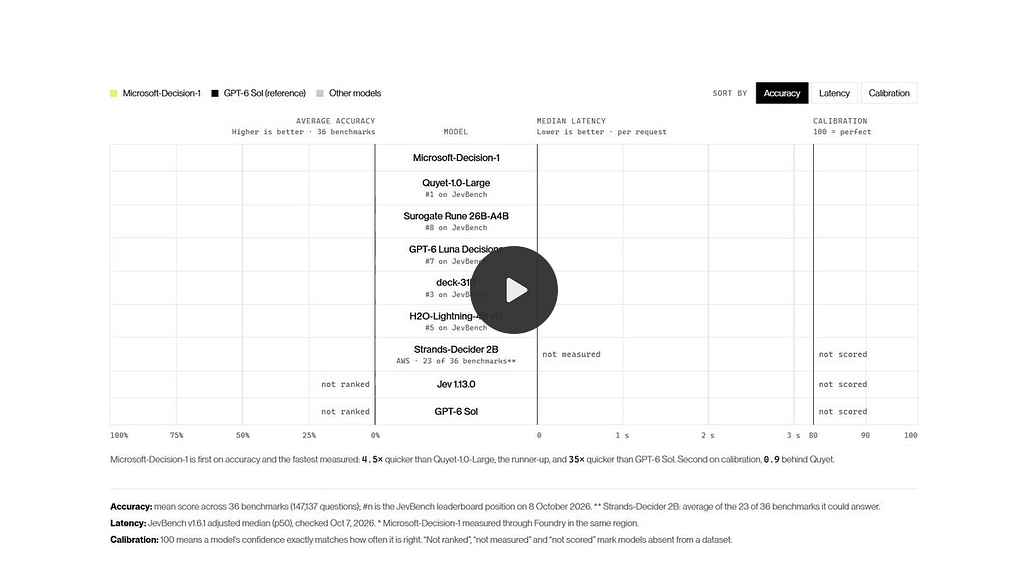
#this is the toughest part for all software cos today…openai already built their own Jev and same with cloudflare just weeks after breakout debut but read on - there’s more to story below…data flywheels, brand, intelligence can scale…
#but…an $870 million at a $7.5B valuation from a16z and Sequoia means there’s an Act II and Act III - and you have to imagine this early usage that is growing exponentially is feeding insane intelligence so going to be fun to watch 🍿
#more on the agent builder side - Hermes is an open-source agent where you pick the model and host it yourself whereas Grok Bot is a managed cloud agent that now auto-routes tasks to any other model. Key difference is Suno.Hermes is control; Grok Bot is convenience.
#to that end: Sierra (Bret Taylor former Co-CEO Salesforce) launches personal agent protocol which is much needed. Huge deal because personal agents get a standard, secure way to act directly with businesses instead of screen-scraping websites or pretending to be humans. PAP standardizes identity, authentication, permissions and action — the user says what their agent can do, while the enterprise controls what it exposes via web, APIs/MCP, or its own agent. If adopted broadly — Meta, Stripe, Shopify, Walmart, Genesys already involved — this could become the HTTP/OAuth layer for agent-to-enterprise commerce and customer service
#interesting to see the number for the giant AI bet we are all living in from the master of valuation Aswath (also created a simple explainer video below worth watching) - equities are priced for perfection!
As you know I have been pounding the table on Tollbit and the agentic identification issue. We need new infrastructure for the new customer. It is imperative that something be done because agents are using any and all tactics to conceal their true identity in order to gain access. There is currently a bill in Congress called the Stealth Bot Prohibition Act that should be taken up and debated.

























As you know I have been pounding the table on Tollbit and the agentic identification issue. We need new infrastructure for the new customer. It is imperative that something be done because agents are using any and all tactics to conceal their true identity in order to gain access. There is currently a bill in Congress called the Stealth Bot Prohibition Act that should be taken up and debated.