10 Years of What’s Hot! Cyber Defense Factories and AI’s Next Physical Frontier
Back from a whirlwind week in SF and still processing! As I’m writing this morning’s newsletter I also just realized it’s issue 520 which means this is the 10 year anniversary of publishing this every single week! What started out as notes to myself to better understand what’s happening in the world, in addition to offering a creative writing outlet for me which is something I enjoy, I’ve also met so many founders and investors through this. So I want to thank each and every one of you for reading, sending notes, and mentioning something I’ve written. Here’s to another 10 years doing this…I hope 😂!
One of the highlights this past week was joining the AI Security Summit to share some of my thoughts on the state of security but more importantly to learn from many of the best from companies like OpenAI, Cognition, Anthropic, Google and of course portfolio cos like Snyk and Keycard.
Two themes kept coming up during our media panel the night before and at the summit: building cyber defense factories, and securing the agents running them.
Companies need to build their own cyber defense factories just as developers are building software factories. Security is increasingly a game of compute. As hacking becomes more accessible, attackers can deploy agent swarms to probe defenses continuously, and defenders need their own agents to keep up. Most orgs still aren’t culturally ready for this, but the message from the panels was clear: we don’t have the luxury of waiting.
To that end, it was quite cool to see Snyk, a port co, release it’s own agentic defensive swarm to find, fix and block vulnerabilities. Snyk reports 90% mergeable fixes versus 59.6% for general LLMs, using 61% fewer tokens. But the part that stood out to me: every fix is checked independently of the agent that wrote it.
The other huge topic was agent security and identity. We heard plenty about agents escaping sandboxes and finding unexpected ways to accomplish their goals. The recurring point: security controls have to live outside the agent itself, with scoped identities, enforced permissions, sandboxing, and monitoring that can stop unexpected behavior. We need to secure both the software agents produce and the factory producing it, including the skills and automated workflows that compound over time.
Along those lines, it was great to see Ian Livingstone from Keycard, a port co, help publish the first draft of the Agent Baseline Software Factory Reference Architecture alongside contributors from Docker, Socket, Barclays and Secure Theory. It puts a concrete blueprint behind what kept coming up at the summit: agents propose, policy authorizes, and infrastructure enforces. That means limits on where agents run, what they can access, and which dependencies they can use - all enforced outside the agent itself. If we’re going to fight agent swarms with agent swarms, we need to trust that our own defenses will stay within those boundaries.
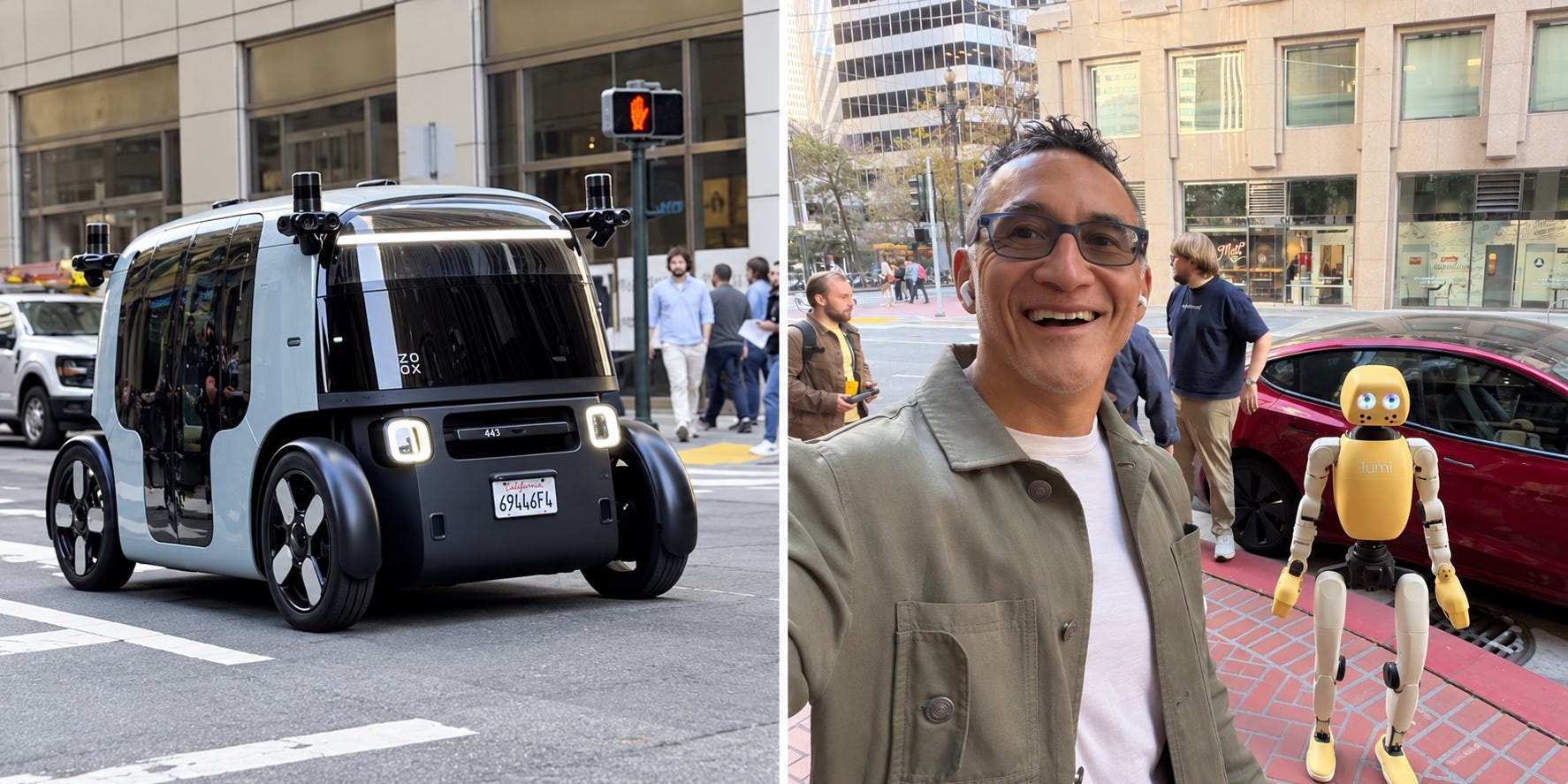
Finally, Deirdre Bosa asked where I’m investing. At boldstart, we back technical founders at inception or company formation, which means partnering with people looking two years ahead. Dozens of startups are already working on the problems we discussed at the summit. So where do I see the next opportunities? Well, SF is the future, so look at these pics and you know where my mind is!
As AI makes it easier to solve harder problems, I believe we’re going to see an explosion of physical devices in the world. But who’s going to secure all those robots, drones and autonomous systems? These systems need patching, but you can’t assume you can stop a car or interrupt a drone mid-flight to install an update. We’ll need real-time defenses that can protect these systems while they keep operating.
I also believe the rush to build data centers and neoclouds will expose some massive security gaps. So much money is pouring into systems that are heterogeneous, complex and hard to manage. Who can see what’s running, understand what’s exposed, and secure it? Take a look at Lava 🌋 for one example of where we’re investing.
As always, 🙏🏼 for reading and please share with your friends and colleagues!
Thanks for reading What's Hot 🔥 in AI/Infra/VC! This post is public so feel free to share it.
#there are no moats in software, we know it…Always about the founders and team - shipping velocity, constantly iterating, learning - also brand…but yeah, world is moving so fast!
#Neural networks may have far more interpretable neurons and circuits than we assumed. If this holds up, we could trace how models reach decisions and pinpoint mechanisms behind failures. Would be a huge step toward debugging and steering powerful AI…though understanding isn’t a guarantee of safety.
#the economics are in a hacker’s favor - spent $40k and 6 days to go after $1b users and got paid $250k in the process 🤔 - Chrome, btw, is one of the most hardened pieces of software on the planet and this is why this is big from Oege:
A full-chain exploit lets an attacker take total control of a machine, where they can read every email, password and bank login the user types. You don’t need to download anything or click a phishing link. Visiting the wrong site is enough.
#Muse and instinct and other consumer agents proliferating but rest assured your money is safe at JPM - Jamie and team don’t trust what they can and can’t do yet
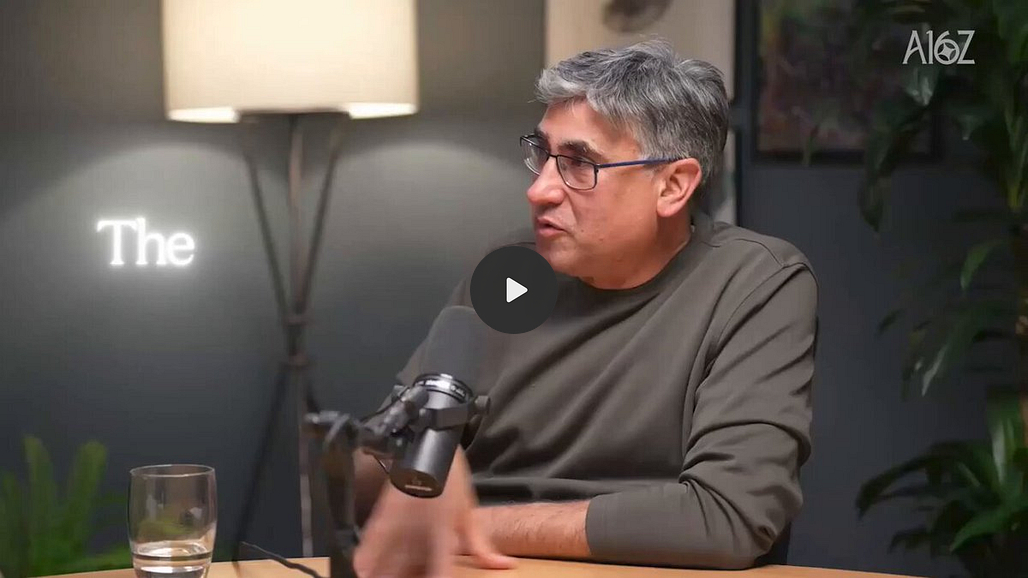
#love seeing Jad from Grepr (a boldstart port co along with a16z) drop some knolwedge on how broken observability is and how AI can reason about how systems really run 🤯
#quantum advancements coming faster and faster - this is big - google took something that worked on paper and showed it working on real hardware, with 40x fewer errors in a key building block. still needs to scale, but could mean useful quantum computers need a lot less hardware.
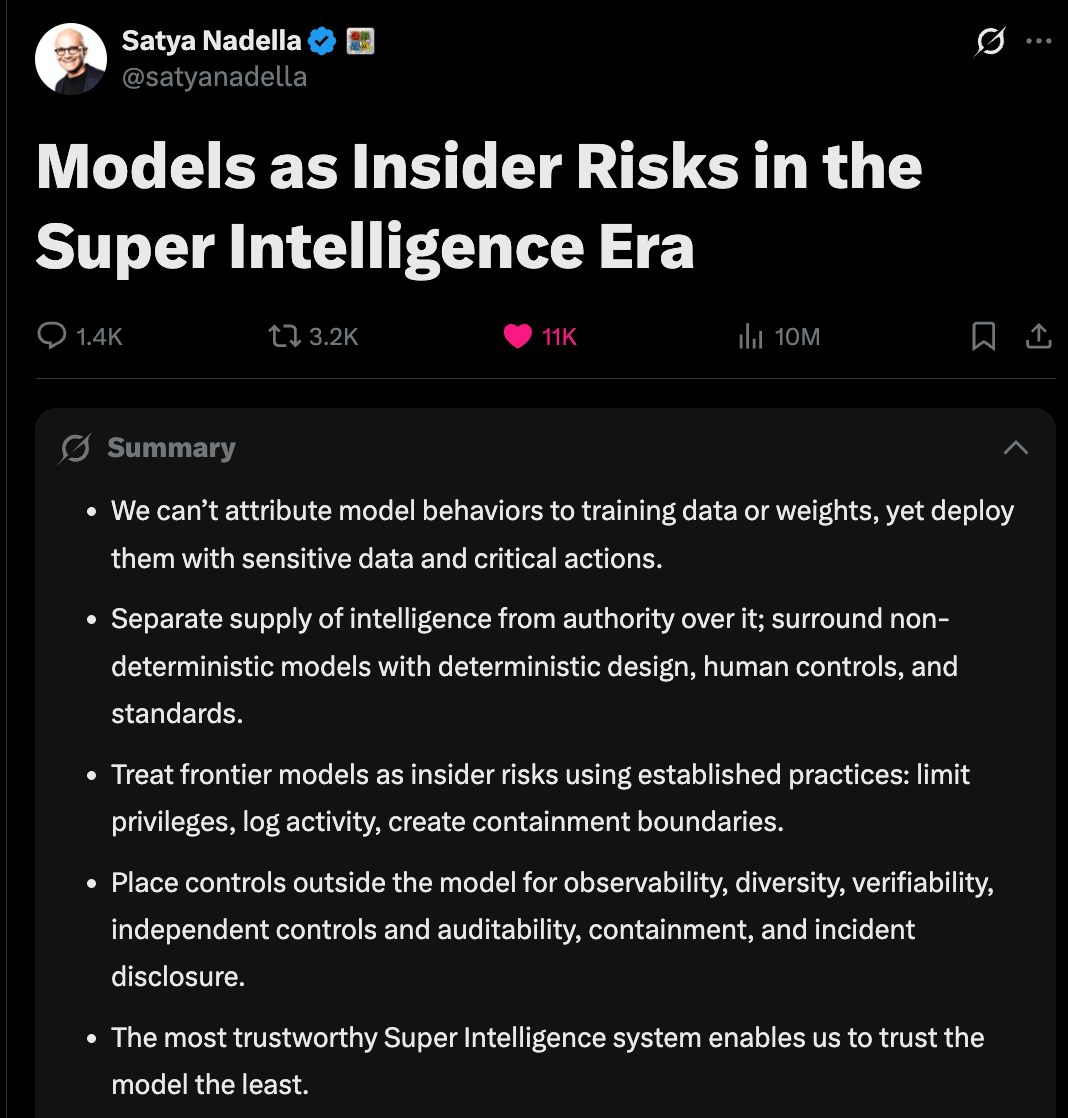
#💯 agree w/Satya, treat models like insider risks 🤯 - “separate the supply of intelligence from the authority over it” or in other words, the generator can’t be the validator or the fox should not be guarding the henhouse
the model can’t hold the keys, something outside it has to decide what it can touch and revoke it in real time
that’s Keycard, Ian Livingstone and team saw this coming 2 years ago 👀