Big Ambition, Market Jitters, and a Funding Plan A, B, and C
We are still digesting the blue wave that swept America, and what it means for data center buildout and AI. Long term, I’m with Elon on the jobs and opportunities ahead. Short term, it will take some sorting out as politicians negotiate their piece of the pie.
What concerns me more is the public markets. They’ve gone from 100% risk on for AI and buildout to neutral. It started with CoreWeave unsecured debt a few weeks ago, where yields went from under 10% in June to 15-16% now. That’s a steep return investors are demanding to hold that debt. Alongside Thursday’s selloff, it shows how quickly risk is being repriced.
Even the frontier labs are facing questions about how much they can raise and at what valuation. OpenAI reportedly has roughly $11B in commitments against an original $30B ask. Anthropic IPO expectations have gone from as high as $2T to around $1.5T, and now some prospective investors are talking $1.2–1.3T. None of this is final. But when the biggest companies are working out how much they can raise and at what price, it flows into the rest of the market.
This came up at our investor AGM last week. Per PitchBook, OpenAI and Anthropic alone took over 40% of every dollar raised by startups in the first half, and the top 10 companies took roughly 70% 😮. The big multi-stage firms wrote those checks, and now many are back in market raising again, fast. Their LPs are over-allocated, distributions are thin, and the ask keeps coming. That is the backdrop for every check being written right now.
I’m already seeing rounds take longer and hearing about price changes in later stage financings. The ambition is still there. But the multi-stage firms with big exposure to the largest labs are digesting, and that weighs on anyone getting ready to write another large check.
So the bar just moved. What was getting funded with $100M a month ago is now taking more time and a lot more questions. That’s ok. It’s healthy. The exception is the rock star AI researcher like Mira Murati, reportedly closing $5B at a $40B valuation.
For everyone else, expect more questions and a slower yes. How much slower depends on your stage, your round size, and what the money is for. The game is not over, we’re still in the early innings, it just requires more forethought and planning instead of money getting thrown at you.
So what do you do? I’ve been telling founders to have a few plans. The super ambitious raise, say $100M for an A, needs a few alternatives next to it. Think hard about what smaller numbers deliver in tangible milestones: what does $100M get you that $50M doesn’t, $50M that $25M can’t, or $25M that $10M can’t? Does the product ship sooner? Do you land customers faster? Can you run more experiments at once? There may be a very good reason to raise the larger round. Help people understand what the extra capital actually buys. And in certain markets, being crowned king early draws talent and customers to you.
My instinct is that this is a temporary blip. But I wouldn’t build a fundraising plan around that. If you need to raise now and capital is available on terms you can live with, think hard before passing on it to chase a bigger round or a bigger name.
Which brings up the other thing to figure out fast: who the closers are and who the time wasters are. When investors take longer, a drawn out maybe costs you more than a no. Ask the direct questions early. What do you need to see to get to yes? Who else needs to be in the room? What’s your timeline? Then anchor the round around investors with conviction and a clear path to closing.
I remain absolutely fired 🔥 up about the future, and as excited as ever about what technical founders can build from inception. Don’t shortchange your ambition. Just be ready for it to take a few more steps, and possibly a few more rounds, to get there. Keep the ambition big, keep learning, and have more than one plan.
As always, 🙏🏼 for reading and please share with your friends and colleagues!
Thanks for reading What's Hot 🔥 in AI/Infra/VC! This post is public so feel free to share it.
#Palantir already delivering on top of Nemotron, a sovereign open weight model, critical for many large enterprises and government - domain specific data the company owns is when it works
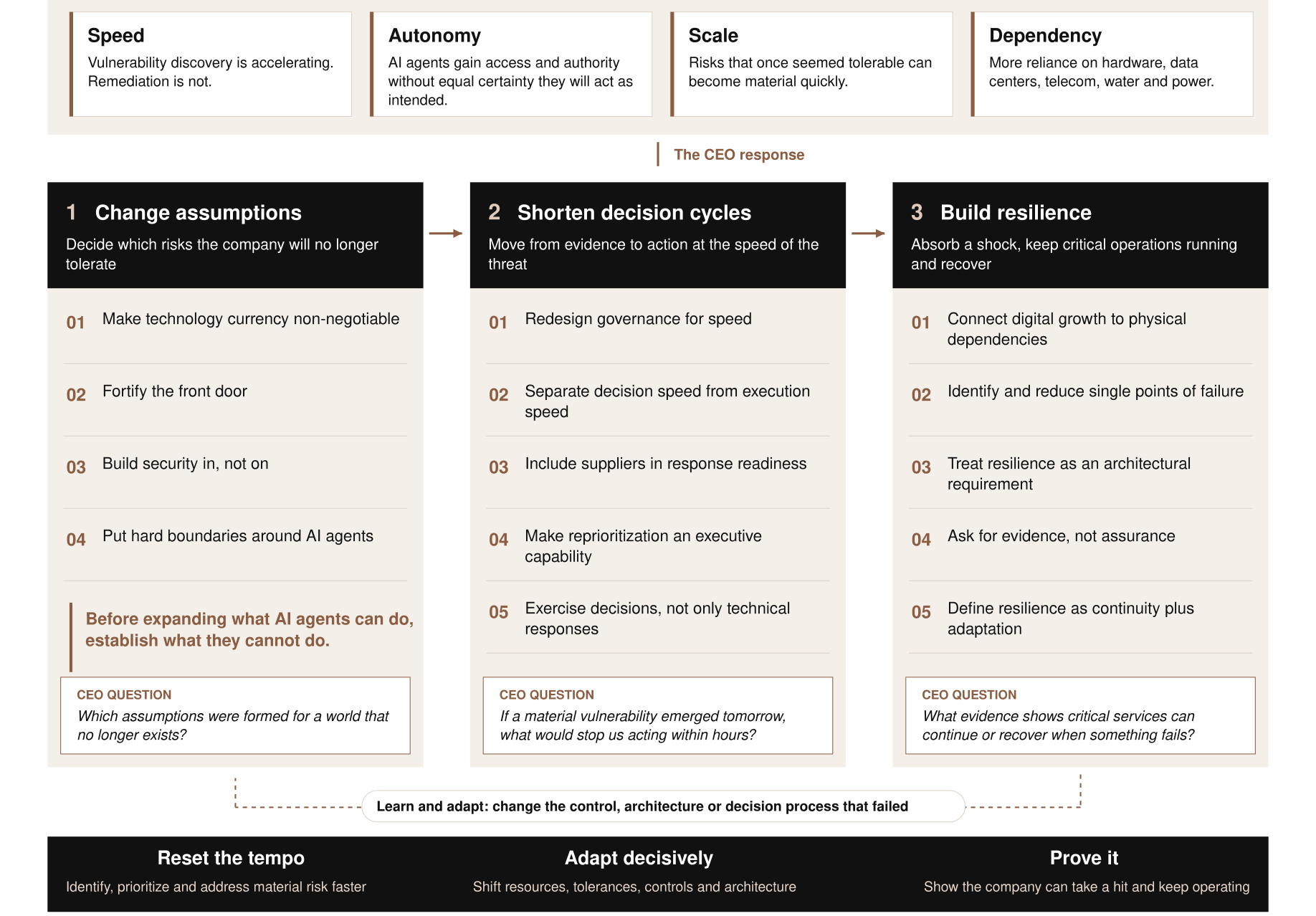
#JPM has over a $1B cybersecurity budget and is one of most sophisticated groups i know so when CISO Pat Opet writes about how you can better secure yourself, it’s a must read - 200 days into the frontier: What we know and what to do now
#OpenAI releases a cybersecurity only model and claims JPM as one of first customers
#you only need frontier models for a little of your work…Internal results show 60% reduction in coding time and 70% drop in engineering lead time, backed by a chart tracking steady productivity gains from early 2025 through mid-2026 as open-source became primary. Also why this box from port co SpectroCloud and AMD and Super Micro is selling!