24 years vs. 6: the fastest trillion-dollar IPO ever, and what it cost to get there
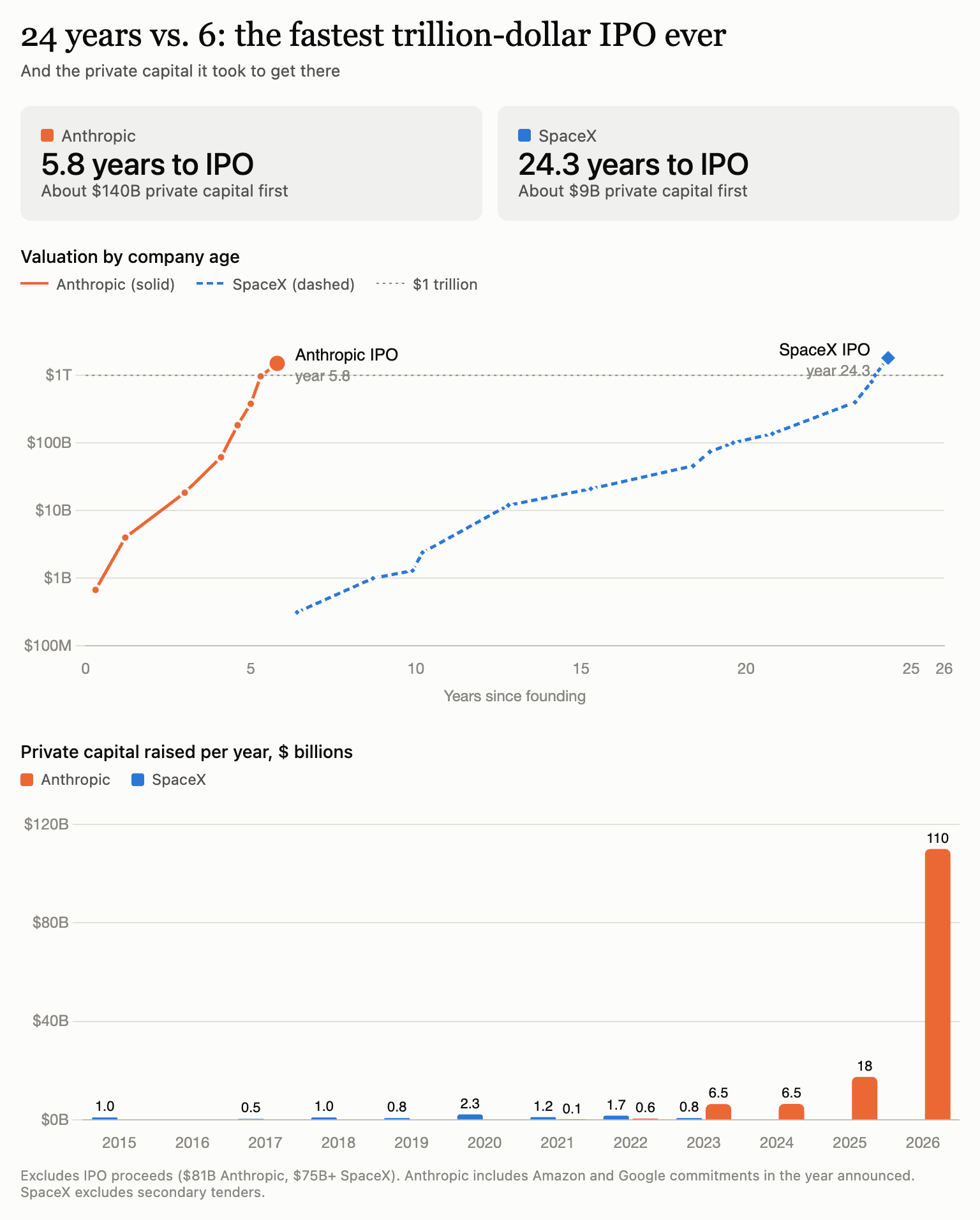
Hats off to Anthropic…and SpaceX, the founders, team and investors - legendary! We just had two of the biggest IPOs we have ever seen this year, but what gets me thinking is the stark contrast in time it took to reach the public markets - 5.8 years for Anthropic and 24 years for SpaceX. Same outcomes over $1 Trillion which in and of itself is absolutely mind blowing 🤯
Take a look at this chart to see how venture capital has changed forever.
The returns and outcomes are staggering and hard to unsee. The problem is what happens when the bulk of LP capital going into venture funds piles into the Top 10 names, and deservedly so. These funds get larger and larger and need to chase Anthropic like outcomes. That works when there’s a generational opportunity where you can plow over $100B into one company. It also distorts so many amazing businesses worth less than a trillion.
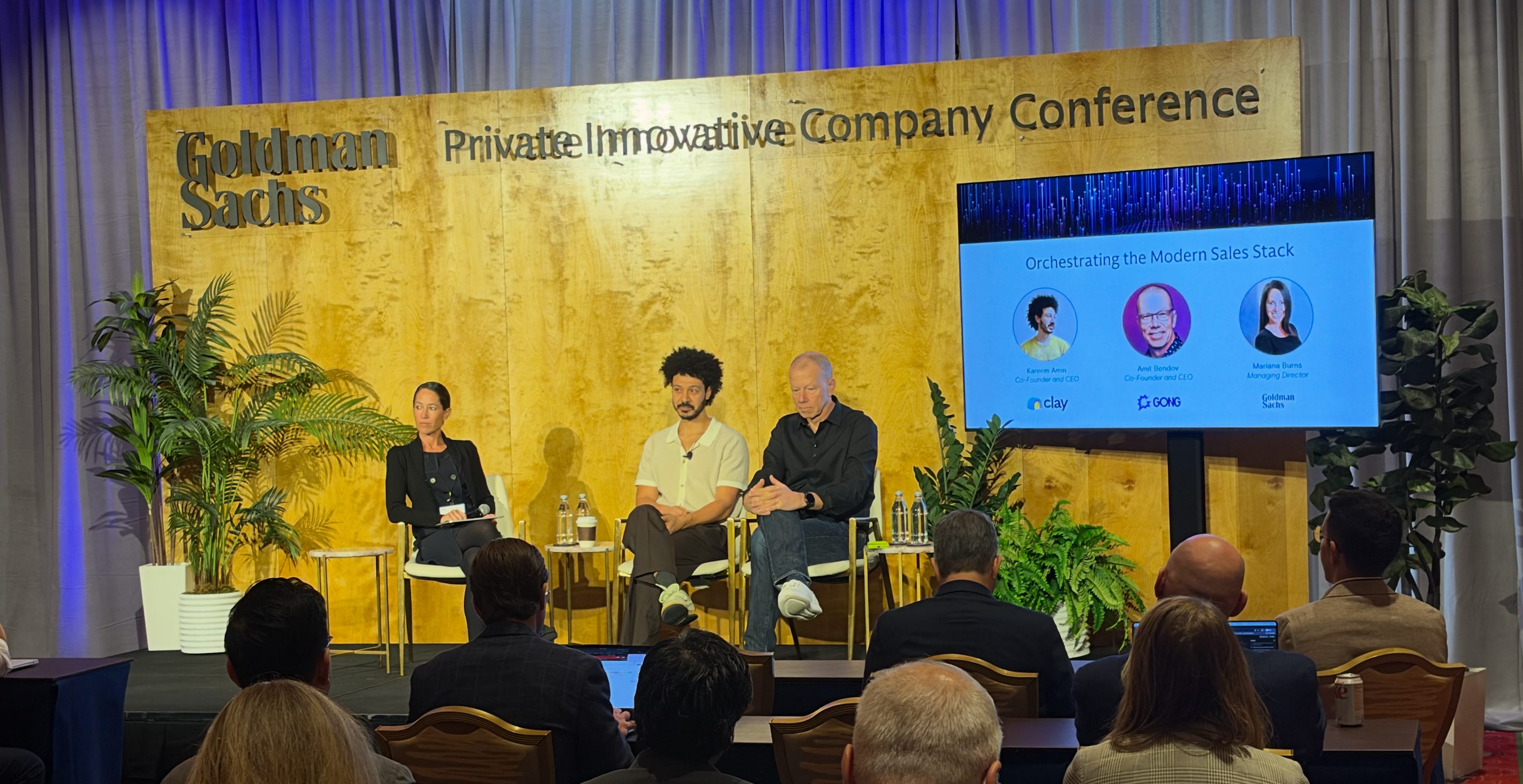
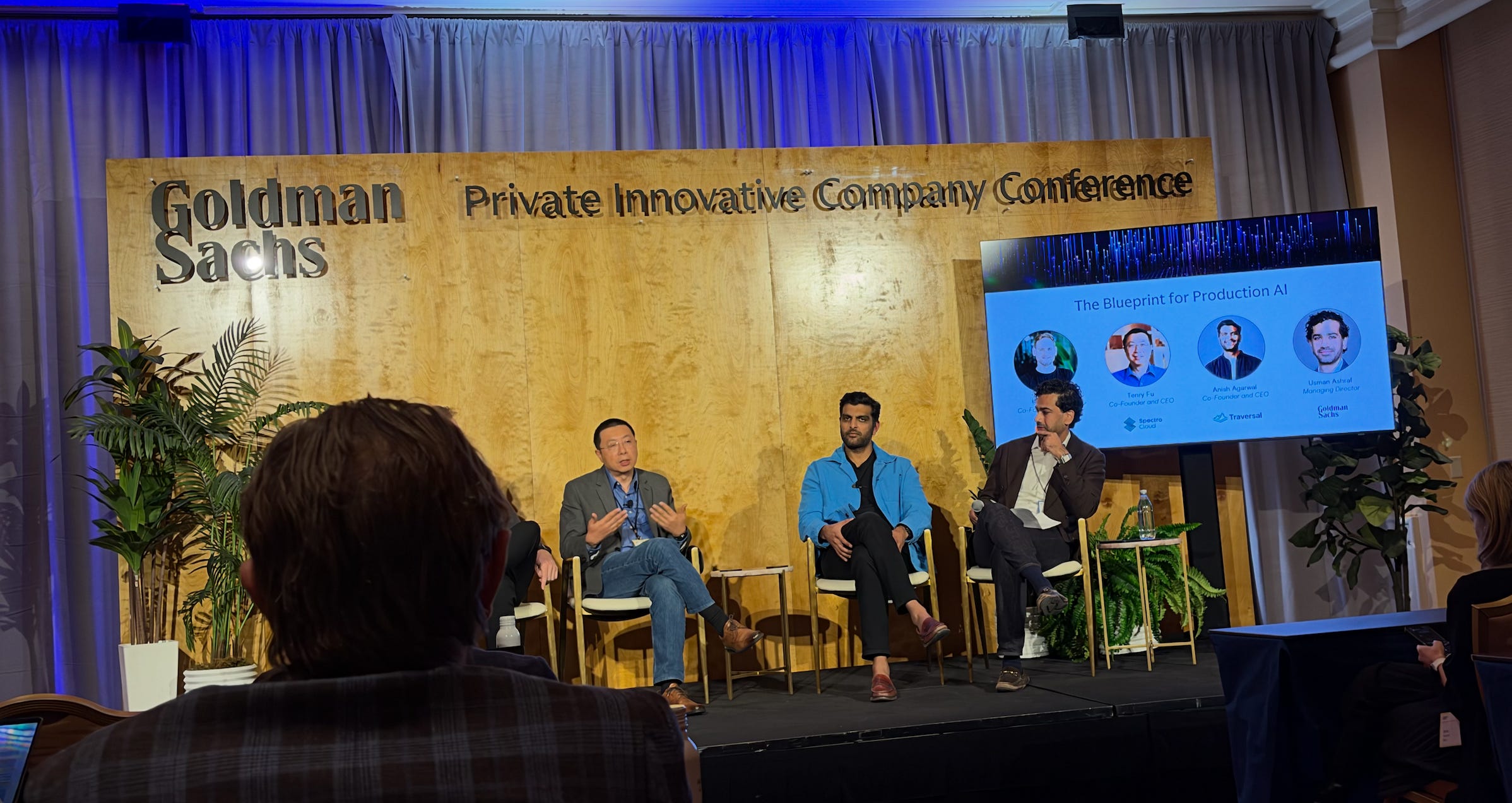
That was certainly a discussion I had with a lot of venture investors and public crossovers at the annual Goldman Sachs PICC (Private Innovative Company Conference) in Vegas this past week. I wrote about last year’s here and 2024 here. IMO there is no better chance to gauge the sentiment and mood across the next stage of investors as an Inception guy.
Here are a few pics from the show with Kareem from Clay (a boldstart port co) on stage with Gong talking about rewiring GTM and the opportunity ahead for self learning revenue ops.
And Tenry Fu from Spectro Cloud (a port co) talking about the hybrid compute, from cloud to edge, and how to deliver apps reliably, securely and at scale.
In the opening kickoff presentation, the key takeaway was that tech used to be the capital-light business, and now it’s the most capital-intensive buildout we’ve ever seen. A year ago hyperscaler capex expectations were $400B. Today they’re closing in on $1 trillion. You can see the venture version of that in the bottom half of my chart above. When it works, you get Anthropic and SpaceX. Every investor on the planet has now seen it, and every investor is underwriting the next one to look just like it.
Just look at the cash 💰. SpaceX raised about $9B of private capital over 24 years. Anthropic raised well over $100B in under six. And SpaceX is the capital efficient one! Within 5 months of going public they raised $25B in bonds and another $40B in GPU financing. Even Alphabet went back to the equity markets for the first time in 20 years. Speed costs money, and right now everybody is paying up.
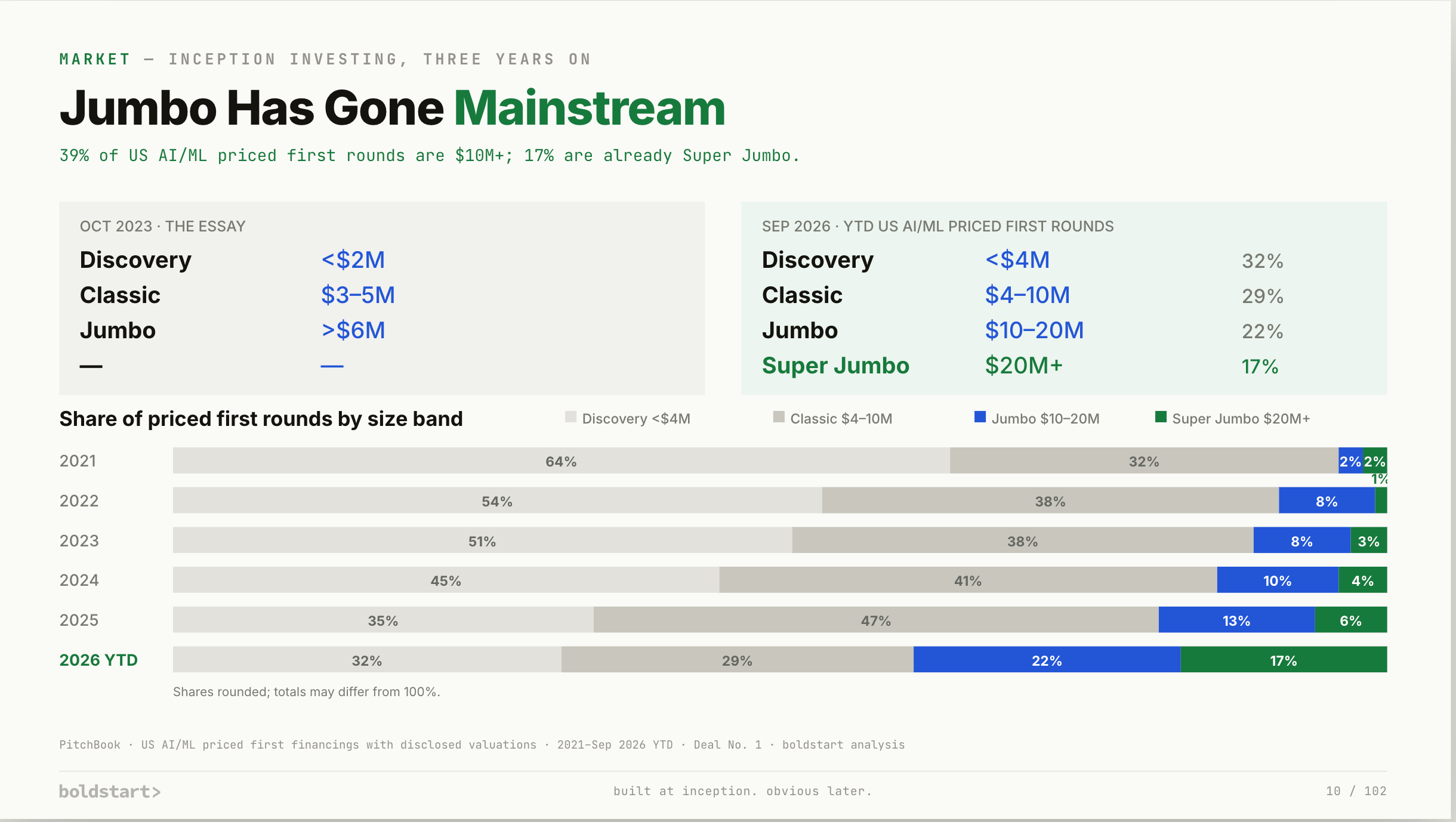
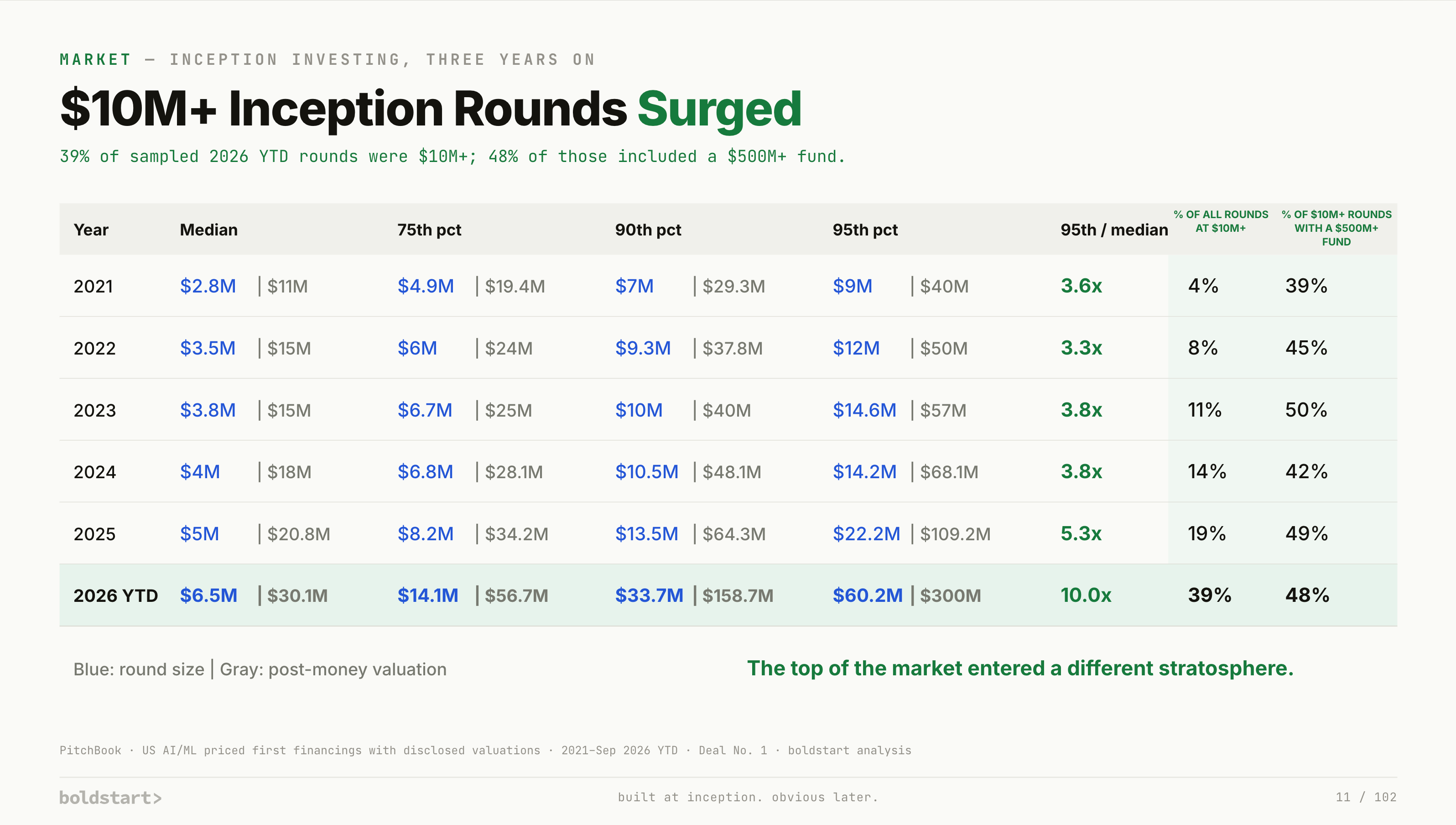
This is also playing out in the venture market from the earliest stages at Inception or company formation. The more the better - kingmaking from inception and willing success with capital. Here’s a chart I shared at our AGM earlier this month - will write more on it later. While it’s not a perfect dataset, it shows how far the market has moved. Almost 40% of priced first rounds in US AI/ML companies are now $10M or more, up from 11% in 2023. And 17% exceed $20M, up from just 3%.
And also it is shown in the valuations from Inception and look at that spread between median and 95th percentile up from under 4x to 10x!
Success is priced in many times from Inception! (deeper dive from a couple weeks ago)
But as I’ve often written, for many of these multistage firms which are raising the bulk of the capital and underwriting Anthropic like returns, these initial rounds are options for the future. And almost half of those $10M+ rounds had a $500M+ fund in them. It’s barbell investing at its finest - invest in consensus teams from the labs with insane amounts of capital at high prices and then pile in for the next Anthropic.
What that means is there are a ton of great businesses not getting funded and the hardest rounds to get done are the tweeners, the ones that used to happen but where investors can only underwrite to a $10B outcome! Crazy world we live in and someone will mop up investing in these cos.
And while it’s truly hard sometimes for growthier investors to see TAM or total addressable market for these companies, the market is so competitive it is much easier for them to wait and sit out a round or two at a $500M or $1B valuation and pay up at $5B to $10B if they can write an even bigger check with a lower multiple but still generate more carry and profits for their investors!
So whether it’s a $20M first round or a $65B growth round, here’s the question I keep coming back to. What happens when it doesn’t work? In the old world a miss cost you a $50M Series B. In this world the biggest checks go in last, at the highest prices, with massive compute commitments stacked on top. Goldman’s math says all this spending needs about $3.5 trillion a year of customer revenue to pay for itself. That’s every big tech company and frontier lab combined today.
And here’s what you get when you raise too much capital at too high a price and can’t grow your way into it and don’t become agent native.
While all this is happening the AI trade is unwinding - if you want a great overview of what got us here, where we are, and the potential opportunities ahead I suggest spending 5 minutes reading this 👇🏻
And BuccoCapital Bloke summarizes where we are - insane disconnect between public and private markets - can both be true - insane growth the public can’t access yet?
We’ve all seen what it looks like when this works. We haven’t seen the bill for when it doesn’t. That being said, I’m finding spots to buy back into the public market and remain as bullish as ever for the future!
As always, 🙏🏼 for reading and please share with your friends and colleagues!
Thanks for reading What's Hot 🔥 in AI/Infra/VC! This post is public so feel free to share it.
#A fun one and we covered a lot of ground in 15 minutes - watch/listen at the end for some startup building anti patterns and what we’re investing in these days at boldstart 👀
#speaking of satellites - Boeing’s self-funded Q4S satellite will prove entanglement swapping works in orbit which is the key relay step that could turn satellites into the backbone of a global quantum internet for unbreakable links and distributed quantum computing.
#and this is why most folks think all the systems went down - patching, using AI to keep up, but ummm, not done well! enterprises need context! to patch at scale!
#speaking of - love how Tibo from OpenAI is putting himself out there for their cybersecurity product Daybreak but shows you the pain that still exists if you read comments - the cyber community mostly wants stronger, less-refusal models and less bureaucracy. In addition, on the Defense Factory side, it finds a lot of vulns but struggles to turn them into verified, prioritized, production-ready fixes
#Nikesh PANW buys Applied Compute for $4.5B - founded just over 18 months ago with team from OpenAI - team is 23-25 years old! Here’s the why - PANW needs to be AI first starting from the model first and stock was up over 9% on the news - pay $4.5B and increase your market cap even more - great one!