What a start to 2022!

From CNBC - Wisdom Cloud ETF down 27% since November!

While it was a tough week marketwise, we’ve had a great run and this was to be expected given the rising inflation and prospect of interest rate hikes. As you can imagine, I am as bullish as ever and we are continuing to invest in new founders and projects as many of the best founders only start companies in the worst of times. That being said, I want to make sure that founders don’t hit the panic button.
Against this backdrop, I had a couple of conversations this week with founders on the pluses and minuses of preemptive rounds. In particular, a few were considering taking preemptive rounds from suboptimal partners due to fears of a massive correction in valuation and funding interest. While we can’t predict the future and a bird in hand is often better than few in the bush, here’s how I’d summarize:
For:
Eat when dinner 🥩 is served: if you can get a valuation that you can get today and get credit for when you would actually raise 3-6 mos from now, then take the 💰.
If the market continues like above, then the lag factor for valuations and market correction will kick in and you are likely to get a lower price 3-6 mos from now.
Uncertainty of execution - nothing is 100% for certain and there is a chance you could miss your goals for product, hiring, users…and taking the money removes that risk.
Time - a true preemptive round is such and takes limited time for a founder to close the deal. Fundraising can be a massive distraction and if a founder can close quickly with minimal disruption, then a huge plus.
Against:
Dilution and valuation don’t make sense - that’s an easy one
Partner over price - in an ideal world you get both.
When making a decision here’s a simple framework I like to use:
Instead of optimizing for all of the inbound VC interest, let’s work backwards and tell me what your dream scenario would be in terms of partner (individual first, firm second), round size, and dilution. If your preemptive choice checks all of the boxes, then the decision is easy. If not, then you have a lot more 🤔 to do.
There is no hard and fast rule and for each founder I’m sure there is a different psychology and cost/benefit analysis. In my experience, the founder/investor/partner relationship matters the most and should trump all else. So while tempted to take great terms for an easy raise from a suboptimal partner, I’d think twice before doing so. Yes, this market is not great but remember this, VCs are never responsible for the success of a company, but they sure have been responsible for the demise of many a company. Choose your partner wisely and don’t panic. Keep building and stay the course.
As always, 🙏🏼 for reading and please share with you friends and colleagues.
Scaling Startups
Must read 🧵 on how to manage people in a remote world
 Job@Jobvo1/ I've been managing people remotely for 8 years. Here's how to be a better manager in a remote (distributed) team:12:00 PM · Jan 2, 20222.77K Reposts · 15.1K Likes
what 2022 is looking like from a fundraising perspective
Harry Stebbings@HarryStebbingsIt is not even 4PM on the first day back and I have already seen: $100M pre for pre-product company. $1BN pre for $1M ARR company. $10BN pre for company less than 15 months old. My oh my, welcome 2022.3:53 PM · Jan 4, 202288 Reposts · 1.21K LikesAnd the LP view from Beezer Clarkson of Sapphire Ventures 🧵
Elizabeth Clarkson@Beezer232Best wishes for 2022 everyone! 🎉 As we enter the new year, I wanted to share a bit of LP perspective. We all know the venture market was on 🔥 in 2021, but how is that actually manifesting and what does that mean for how the proverbial table is being set for 2022?6:35 PM · Jan 4, 202244 Reposts · 277 Likes❤️ this from Dan - why we love missionary founders
Dan Rose@DanRose999In 2006 I was meeting with Jeff Bezos to discuss acquiring Audible when he described their founder Don Katz as “a missionary, not a mercenary.” I later learned Jeff got this framing from John Doerr, and it struck me as a good distinction when evaluating people. Here's a 🧵:5:59 PM · Jan 2, 2022486 Reposts · 3.34K Likes💯
Shreyas Doshi@shreyasThe real hard work starts after the launch. Few understand this.5:36 PM · Jan 5, 2022136 Reposts · 1.31K Likes
Enterprise Tech
State of developers in Web 3 report - some great nuggets in here…growing fast but still small…
Avichal - Electric⚡️Capital ┻┳ (¤,¤) 🍣🦙 🐇🕳@avichal1/ Time for @ElectricCapital's Annual Developer Report: medium.com/electric-capit… We analyzed 150m+ repos & xM code commits to produce these 100+ charts. This was a community effort: 150 people contributed via email and Github! Thank you everyone who helped. Let's dig in👇5:13 PM · Jan 5, 2022264 Reposts · 849 Likes18,000+ monthly active developers commit code in open source crypto and Web3 projects
34,000+ new developers committed code in 2021 — the highest in history
4,000+ monthly active open-source developers work on Ethereum, 680+ open-source developers work on Bitcoin
20%+ of new Web3 developers join the Ethereum ecosystem
65% of active developers in Web3 joined in 2021; 45% of full-time developers in Web3 joined in 2021
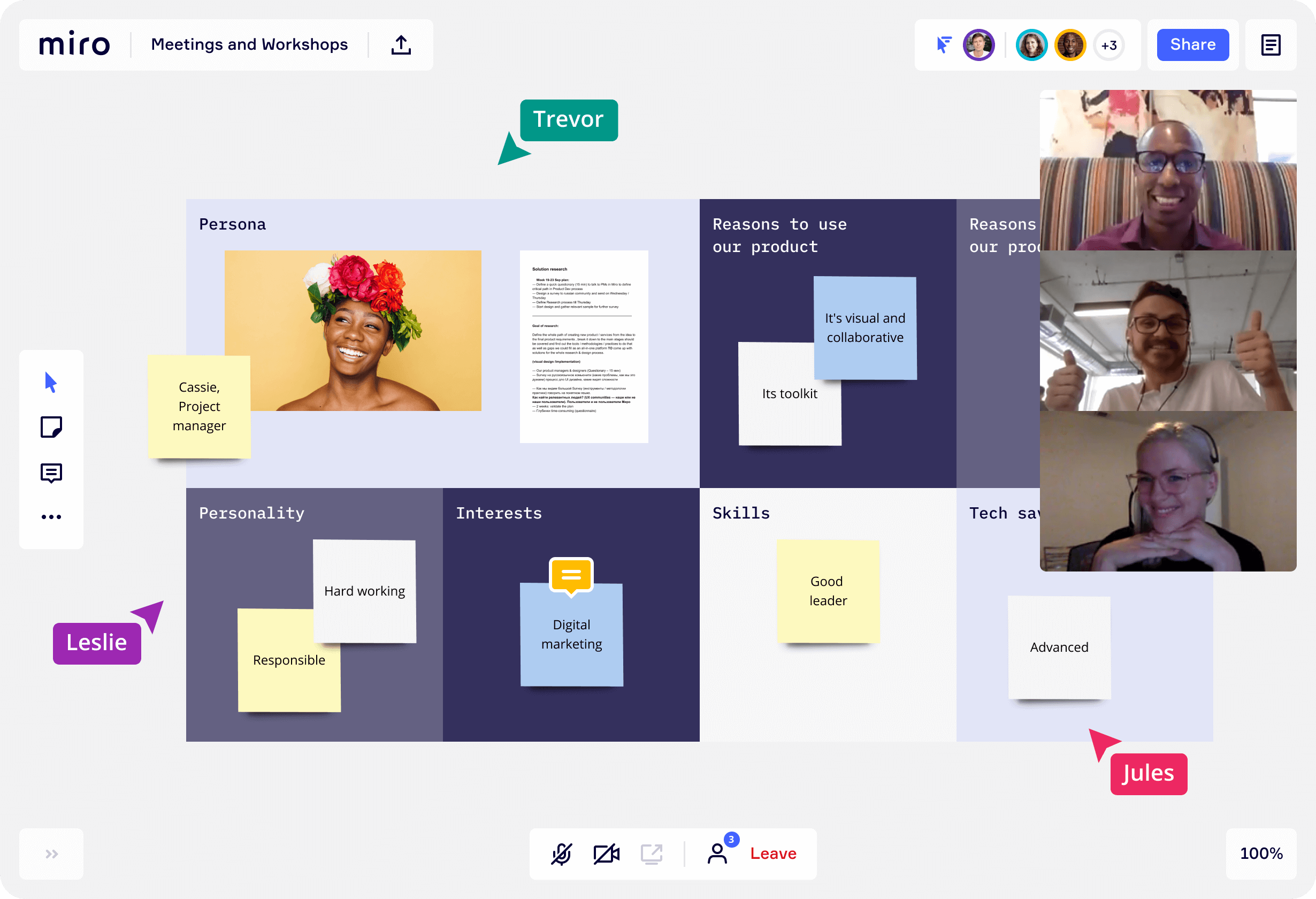
PLG on 🔥 - Miro (whiteboarding to meeting platform) raised $400M at $17.5B 🤯 valuation - increased valuation from $725M pre-pandemic to over $17.5B

“Miro has kept its financial metrics under wraps since the beginning of the pandemic in April 2020, when the company was worth $725 million post-money. CEO Andrey Khusid said Miro’s never been “focused on how much the company’s valued, we were focused on the value we create for users.” But it’s hard not to shout from the rooftops about a $400 million funding round and a $17.5 billion valuation. The company reports its users have grown from 5 million to 30 million since April 2020.”
What problem are you solving?
Aaron Levie@levieRemember: users do not care about your architecture. They care about your value proposition. Every ounce of friction from an architecture choice that shows up in UX, or limits scale, or increases cost, or slows down velocity, will eventually be a disadvantage.4:15 PM · Jan 2, 2022380 Reposts · 3.03K LikesWant to go from successful OSS project and monetize? Know your user!!! More from Emily Omilier (New Stack)
“Being able to monetize your open source project is knowing your targeted users. “When a question is tangential, that’s a sign right that you have a problem. It’s just a sign that the questioner has understood something incorrectly. And then when it’s compared to other things….like ‘does this compete with x?’ or ‘is it complementary to x?’ If those questions are making sense, that’s great. If they don’t make sense, or people seem to compare you to things that are way off base, that’s a sign that you’re not communicating correctly.”
Knowing your targeted user pain points, the outcomes they expect and other technology they are using as well as being mindful of constraints they may have can help maximize a project’s success. “In an open source context, you want to know, what is the thing that made them think today is the day when I need to go and find a project that I could download to accomplish? … What was the trigger that caused them to stop doing whatever they were doing and search for the solution?” said Omier.
(if interested in more, we did a @boldstart interview with Emily last year)
👇🏼 all about scaling eng productivity in microservices
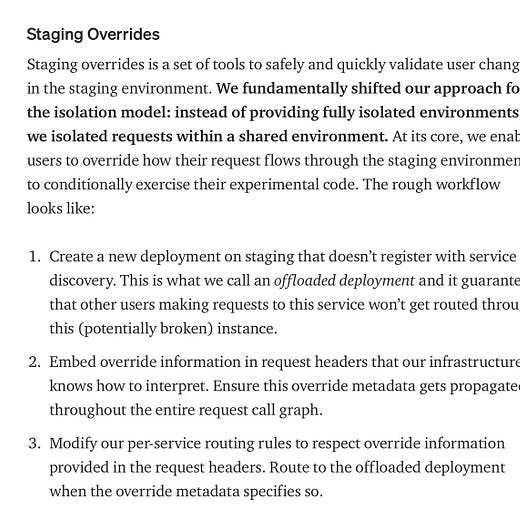
Cindy Sridharan@copyconstructWow - Lyft did a four part blog series on scaling engineering productivity in a microservices world. lft.to/32Nir5v Key takeaways: - “fullstack in a box” doesn’t scale - fast, local, native dev environments are indispensable (h/t Tilt) - staging overrides with Envoy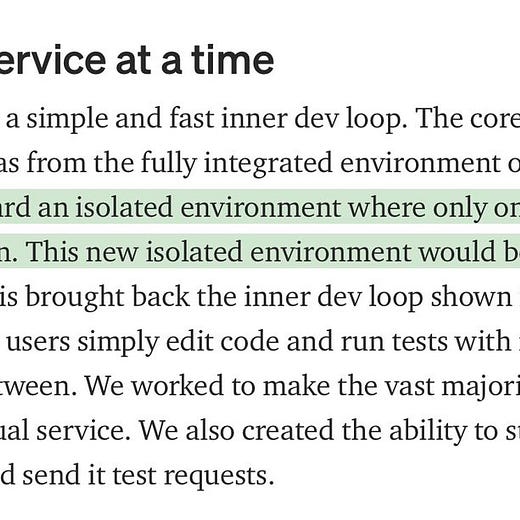

 2:23 AM · Jan 5, 202293 Reposts · 578 Likes
Messari Crypto Theses Report for 2022 - super comprehensive 164 page report
Metaverse 101 including what infra is needed to make it scale
Meagan Loyst 🧚♀️@meaganloyst1/ Over the holidays, I went DEEP into the metaverse, writing a 26 page manifesto to outline the landscape & opportunities!💡 Think digital worlds, NFTs, big tech vs. startups, etc. Here's my "Metaverse 101", published on @viamirror. Let's dive in ⬇️ mirror.xyz/themeaganloyst…mirror.xyzThe Metaverse: 101 — Mirror 4:26 PM · Jan 5, 2022346 Reposts · 1.91K Likes
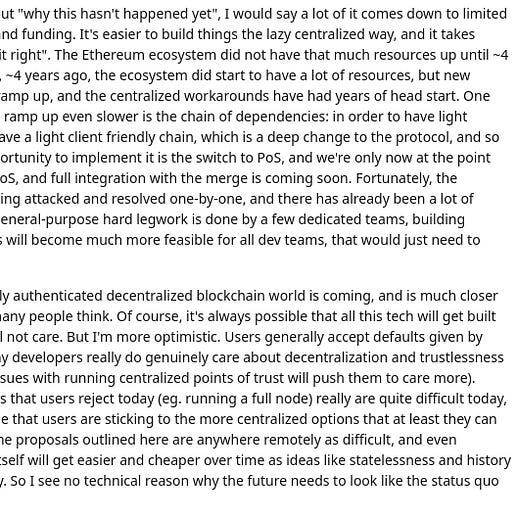
So much more infra to build and get right in web3 - moxie.org - centralization vs. decentralization debate here
vitalik.eth@VitalikButerin@moxie Responded! I think the status quo comes from a present-day "missing middle" where we have centralized-but-easy things and decentralized-but-hard things, but new tech (w lots of cryptography!) actually is on the cusp of giving us the best of both worlds. reddit.com/r/ethereum/com…
 1:59 PM · Jan 8, 2022110 Reposts · 759 Likes
Siemplify (SOAR - security orchestration, automation, response) being bought by Google for $500M - competed with Demisto, another Israeli co, which was bought for $560M 2 years ago)


Markets
Wow that was fast - multiples back to pre-pandemic levels
Jamin Ball@jaminballCloud software multiples are now exactly where we were pre-covid (looking at overall median). This doesn't mean we can't go lower - nothing magical about pre-covid levels. In fact, they were historically high in Feb '20. High growth multiples still 54% above pre-covid levels 9:36 PM · Jan 5, 202227 Reposts · 149 Likes
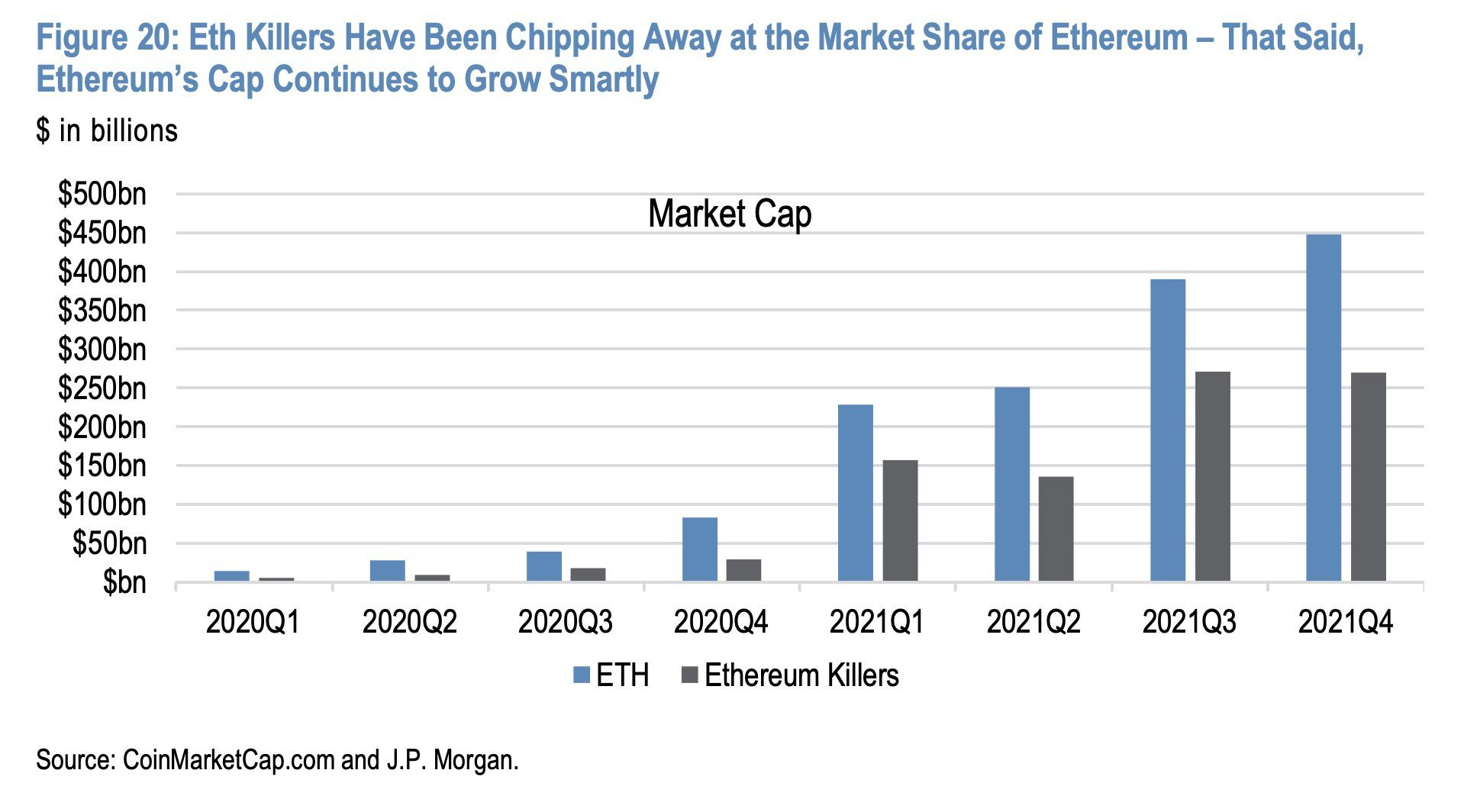
So much more activity to come in Defi in 2022 - JPMorgan: 2022 Could Be ‘Year of the Blockchain Bridge’
What gets tokenized next and what other layer 1 networks are taking Eth market share?
“But the JPMorgan analysts said the segment is in its early stages, as tokenization could hold the greatest potential within financial services — particular for illiquid assets that could benefit from price discovery, liquidity, asset servicing and asset composition.”
“In our future we see the tokenization (and fractionalization) of credit, equities, parts of real estate (commercial to residential to hotel rooms), and non-traded investments including private equity,” they wrote.